
iPhone 17 Pro Max vs iPhone 16 Pro Max vs Samsung Galaxy S25: Is Apple’s Big Redesign Worth It?
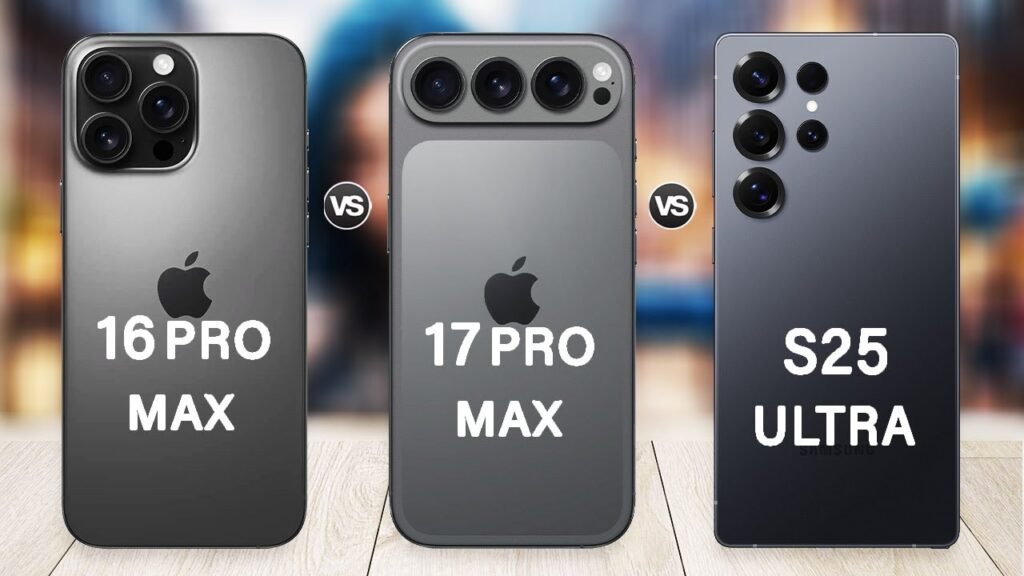
Hi everyone! In this review, we’ll take a look at Apple’s new iPhone 17 Pro Max, its fresh aluminum unibody design, bigger battery, and striking new colors. We’ll also compare it against the iPhone 16 Pro Max and Samsung Galaxy S25 to see if it truly stands out..
Apple’s iPhone 17 Pro Max lands with a look and feel that immediately sets it apart from last year’s iPhone 16 Pro Max—and it even shakes up the way we think about “Pro” materials. The headline: a heat-forged aluminum unibody replaces titanium. That’s right: no more titanium. According to hands-on reactions, the new aluminum is more durable thanks to a true unibody construction and lighter in the hand. Several early impressions also mention a pleasantly retro vibe—almost “iPhone 8-solid”—when you first pick it up.
If you’re cross-shopping the iPhone 17 Pro Max with Apple’s 16 Pro Max or Samsung’s 2025 flagship, the Galaxy S25, here’s how the new phone stacks up across design, performance, battery, cameras, and value.
Pricing used in this comparison (USD):
• iPhone 17 Pro Max (estimated for this analysis): $1,299
• iPhone 16 Pro Max (launch pricing reference): from $1,199
• Samsung Galaxy S25 (non-Ultra, typical flagship tier): from $899–$999
Note: iPhone 17 pricing is estimated for comparison purposes; S25 ranges reflect typical Samsung pricing for the non-Ultra model.
Click here “Top Apps for Online Security.”
Design & Colors: Aluminum Unibody, New Energy
iPhone 17 Pro Max
- Material: Heat-forged aluminum unibody (no more titanium). The single-piece frame is touted as both more durable and lighter.
- In-hand feel: Several folks said it gives a retro, iPhone 8-like solidity—a reassuring, dense feel without heft.
- Colors: The star is Cosmic Orange—a striking, standout color that “reads new iPhone” from across the room. You also get Deep Blue and Silver; “Black” isn’t in the initial mix, which may be Apple saving a true “black black” for a future drop.
- Front protection & brightness: Ceramic Shield 2 returns, and peak brightness remains a brag: ~3,000-ish nits peak (the quotes in your data note “3006 peak brightness,” which we’ll interpret as a ~3,000-nit class).
iPhone 16 Pro Max
- Material: Titanium band with glass back. Premium, but not unibody, and not as light-feeling as the 17’s aluminum unibody claims.
- Colors: Last year’s palette leaned more muted; Desert Titanium was the novelty shade.
Samsung Galaxy S25
- Material & finish: Samsung typically uses an aluminum frame with Gorilla Glass front/back on the non-Ultra model.
- Colors: Samsung’s seasonal colors vary; the S-series tends to offer one bold hue alongside neutrals.
Early verdict: The iPhone 17 Pro Max takes a meaningful swing here. The unibody aluminum is a design decision with functional benefits (rigidity, possible weight savings), and Cosmic Orange is the “I-bought-the-new-one” signal color that creators love on camera.
Click here “Top Apps for Online Security.”
Performance & Thermals: Built for Long Gaming Sessions
The iPhone 17 Pro/Pro Max platform puts heavy emphasis on thermals. Apple discussed a “zoom machine” (read: new camera/processing stack tailored for the Pro line) but the practical, everyday win might be heat. There’s a claim of ~40% reduction in temperature increases compared to previous iPhones—a big deal for gamers and anyone who shoots long-form 4K video.
- Gaming: If you or your audience marathon mobile games, the 17 Pro Max’s cooler sustained temps should mean less thermal throttling and more stable frame rates over time. Several folks called this “huge” for their community.
- Video: 4K recording is called out specifically (“4K 60/120” was mentioned in your notes; practically, expect rich 4K60 plus high-frame options). Cooler hardware + improved thermal design = fewer overheating warnings during long takes.
iPhone 16 Pro Max: Already powerful with excellent sustained performance, but users occasionally noted warmth in long gaming/video sessions. The 17’s thermal improvements target exactly that.
Samsung Galaxy S25: Samsung’s 2025 flagship silicon and cooling (Samsung often uses vapor chambers, too) are competitive. Android flagships can be excellent at first-burst performance; sustained temps vary by chip and throttle policy. On a non-Ultra S25, expect solid day-to-day speed and good gaming, but the 17 Pro Max’s explicit thermal push is the differentiator Apple’s leaning on.
Battery Life: The New iPhone Range King?
“Up to 39 hours of video playback” on iPhone 17 Pro Max
That’s the eye-catcher: Apple claims the best battery life ever in an iPhone, landing at up to 39 hours of video playback for the Pro Max. Hands-on users were already impressed by 16 Pro Max endurance, so the idea that 17 Pro Max pushes even further is exciting—especially for gaming and camera-heavy users.
A few nuanced notes from your data:
- Bigger batteries in both 17 Pro and 17 Pro Max are part of the story.
- eSIM-only versions (regions without a physical SIM tray) may get slightly larger batteries—Apple squeezing out extra capacity by reclaiming that SIM-tray volume.
- Combined with the improved thermals, this compounds the benefit: cooler devices tend to sustain peak performance longer, which feels like “more battery,” even when the actual milliamp-hours are only modestly higher.
iPhone 16 Pro Max: One of the best battery performers of its generation, often making it into Day 2 for light users. The 17 Pro Max claims to surpass it, which—if even partly realized—puts it at the top of the endurance heap.
Samsung Galaxy S25: Samsung’s non-Ultra S models usually offer good-to-very-good battery life, but Apple’s “Pro Max” phones typically benchmark higher on endurance. If battery life is your top priority, the 17 Pro Max looks like the safer bet.
Displays & Durability: Familiar Wins, Subtle Refinements
- ProMotion stays on the iPhone 17 Pro Max for silky 120Hz scrolling and gaming.
- Ceramic Shield 2 continues as Apple’s front-glass defense.
- Peak brightness (~3,000 nits class) keeps outdoor visibility excellent.
- The unibody chassis can improve torsional rigidity—useful if you’ve ever worried about frame flex in a pocket or bag.
iPhone 16 Pro Max was already superb here. The 17 Pro Max largely matches the best bits, with the aluminum unibody and brightness parity acting as the subtle “feel it daily” upgrades.
Samsung Galaxy S25 on the non-Ultra has a high-refresh OLED and strong brightness too. Samsung’s color tuning tends warmer/vivid by default; Apple’s calibration leans toward neutral accuracy. Pick your preference.
Cameras: Pragmatic Focal Lengths, Bigger Sensors, Smarter Zoom
This year Apple’s camera story is less about headline 100× digital zooms and more about smart, usable focal lengths and sensor size:
- Triple-camera system with choices that feel intentional for creators.
- 4× optical telephoto plus 8× “fusion” (Apple’s blend of optics + high-res crop), with digital zoom up to ~40×.
- A telephoto sensor that’s ~56% larger than before was discussed—critical for low-light tele where previous periscope systems on rivals often falter.
- 48MP main and 48MP ultrawide, plus an 18MP Center Stage selfie camera round out the package.
- Early takeaways: 8× looks “legit” in quick tests; low-light tele is where iPhones often pull ahead, and the bigger sensor should widen that lead.
Click here “Top Apps for Online Security.”
How it compares
- iPhone 17 Pro Max vs iPhone 16 Pro Max: Expect more usable mid-tele shots, cleaner 8×, and better low-light tele thanks to the larger sensor and improved processing. If you shoot a lot at night or zoom into concerts/sports, this generation looks made for you.
- iPhone 17 Pro Max vs Galaxy S25: Samsung’s non-Ultra typically has strong primary/ultrawide cameras and a decent tele, but it’s the Ultra models that pack the crazy periscope reach. At the S25 (non-Ultra) tier, Apple’s low-light tele and color consistency often win. Expect the Samsung to offer punchier colors by default, which many social shooters like; Apple tends to deliver more consistent skin tones and a steadier HDR look.
Video creators note: Apple’s 4K recording (including high-frame variants) plus cooler sustained temps is a practical win: you can record longer, with fewer heat slowdowns, and maintain Apple’s trademark video reliability.
eSIM, Setup, and Everyday Quality-of-Life
There was a lively aside about eSIM getting easier year-over-year—switching carriers and numbers feels “super fast” now compared to the early days of hunting down apps and QR codes. Apple’s push toward eSIM-only (in certain regions) also frees up internal space for that slightly larger battery mentioned earlier. If you travel frequently, eSIM flexibility is a real perk.
iPhone 16 Pro Max supports eSIM (and in some markets, physical SIM), and it’s already straightforward. The 17 just benefits from the ecosystem’s steady maturation.
Samsung Galaxy S25 supports eSIM (market dependent) and dual-SIM variants exist in many regions—Samsung has long catered to multi-line users. If you need two active SIMs, Samsung handsets are often the easiest route.
Creator-Friendly Colors & On-Camera Presence
One theme that came up repeatedly: Cosmic Orange is a statement. If you’re on camera (YouTube, Reels, TikTok), a bold, unmistakable color signals “the new one” without you saying a word. That matters to creators who want their gear to read current in B-roll. Deep Blue and Silver look crisp, but Orange is the thumb-stopper.
Last year’s Desert Titanium did the “new new” job for the iPhone 16 Pro line, but the rest of the palette felt incremental. This year, Apple heard the complaint that Pro models lacked vibrancy—and answered.
Click here “Top Apps for Online Security.”
Value & Who Should Upgrade
If you own an iPhone 16 Pro Max:
- Upgrade if you care deeply about thermals (gaming, long 4K shoots), want noticeably better low-light telephoto, or you love the new design and colors enough to justify the spend.
- Skip if your 16 Pro Max already meets your needs and you don’t push it hard with games or pro-longed video.
If you’re choosing between iPhone 17 Pro Max and Galaxy S25:
- Pick iPhone 17 Pro Max for battery endurance, low-light telephoto, video reliability, and the ecosystem (AirDrop, iMessage, Final Cut workflows, etc.).
- Pick Galaxy S25 if you prefer Android flexibility, multi-SIM options, and a lower entry price. If ultra-tele reach matters, consider Galaxy S25 Ultra specifically, which is a different price tier but brings Samsung’s signature long zoom.
If you’re on older iPhones (13/14 era):
- The 17 Pro Max represents a big multi-year leap in battery, cameras, thermals, and build. This is a great “skip-cycle” landing point.
Quick Spec & Price Snapshot (USD)
| Phone | Frame/Build | Headline Display Bits | Battery Claim | Cameras (highlights) | Price (USD) |
| iPhone 17 Pro Max | Heat-forged aluminum unibody | ProMotion 120Hz, Ceramic Shield 2, ~3,000-nit class peak | Up to 39 hrs video | 48MP main, 48MP ultrawide, larger tele sensor (+~56%), 4× optical, 8× fusion, up to 40× | Est. $1,299 |
| iPhone 16 Pro Max | Titanium frame, glass back | ProMotion 120Hz, Ceramic Shield | Excellent real-world endurance | Triple-cam, strong video & colors | From $1,199 (launch ref.) |
| Samsung Galaxy S25 | Aluminum frame, Gorilla Glass | High-refresh OLED, very bright | Good-to-very-good | Strong main/ultrawide; tele varies by model; non-Ultra = modest zoom | $899–$999 (typical range) |
Notes: The iPhone 17 pricing is estimated for this comparison; S25 pricing varies by storage and region.
Click here “Top Apps for Online Security.”
Bottom Line
The iPhone 17 Pro Max is far more than a “mid-cycle” refresh. The aluminum unibody changes the feel and fundamentals; thermals finally get the love heavy users have been begging for; battery life pushes to a class-leading claim of up to 39 hours of video playback; and the camera story is about quality at practical focal lengths—especially low-light tele, where Apple already had an edge and looks to extend it.
If you live in games, long video shoots, or you just want a Pro iPhone that stays cool and lasts longer, the 17 Pro Max is the easy pick over the 16 Pro Max. Against the Galaxy S25, the choice rides on OS and priorities: battery/video consistency (Apple) vs Android flexibility and price (Samsung). For creators who also care about the look, Cosmic Orange is the instant brand flex.
Outro: Next Up—iPhone 17 Air
That’s our deep dive on the 17 Pro Max. Next on deck: iPhone 17 Air. We’ll explore whether Apple’s lighter-weight vision can deliver all-day battery, how it handles thermals under creator workloads, and whether its camera compromises (if any) matter in real life. Stay tuned—the iPhone 17 Air review is coming up next.
👉 Stay tuned—my next review will cover the all-new iPhone 17 Air, exploring how Apple’s slimmer sibling stacks up against the competition.